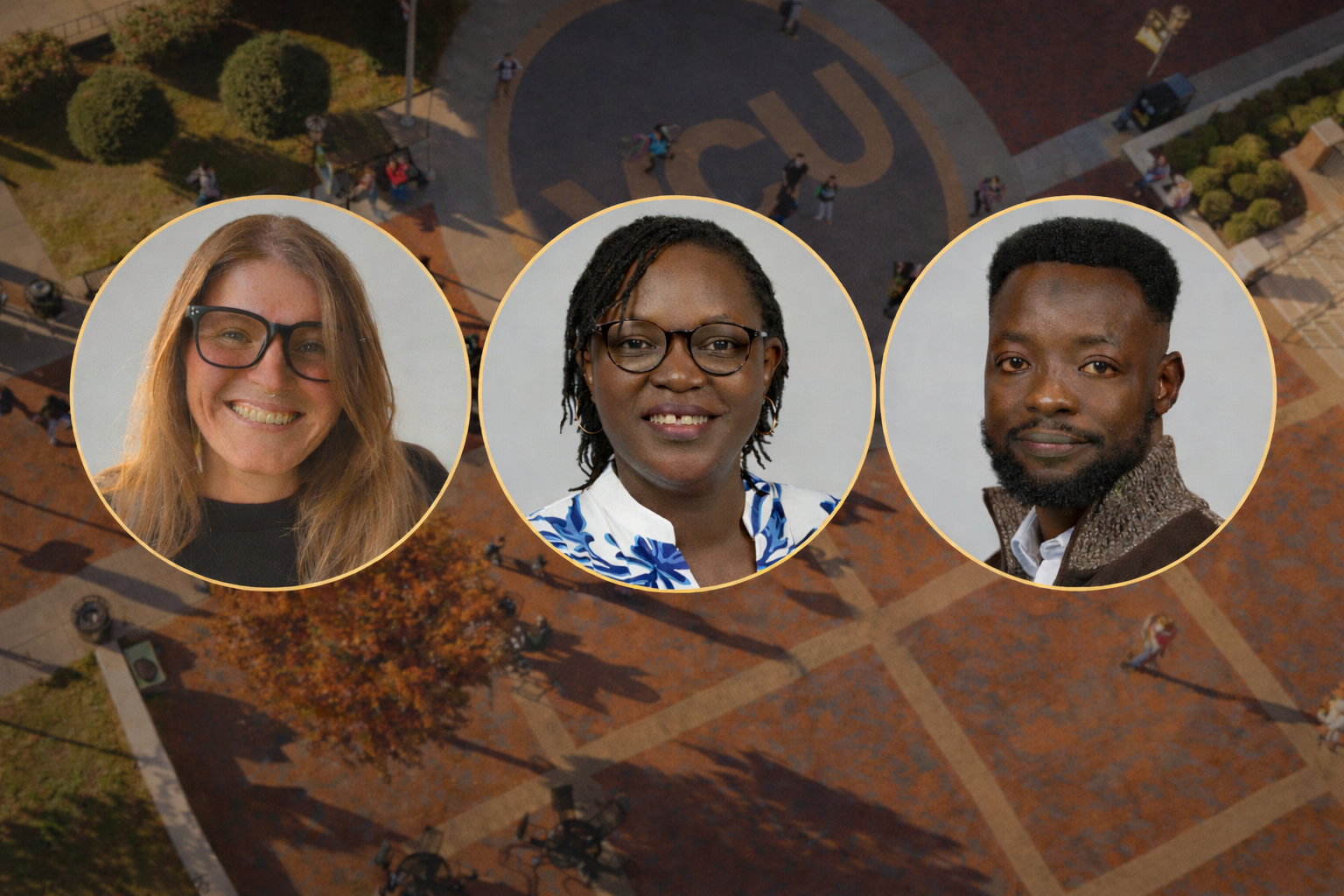
Three doctoral scholars translate research on drowning prevention, Medicaid expansion and institutional bias into accessible public conversations at Cabell Library.
“Anyone can drown,” Jackie Okao told the audience at Cabell Library on Friday afternoon. “But no one should.”
It was a simple sentence, but it captured the heart of her research and the spirit of the VCU Graduate School’s Research Talks, where graduate students are challenged to translate complex scholarship into clear, public-facing conversations.
On Feb. 27, three doctoral students from the L. Douglas Wilder School of Government and Public Affairs at Virginia Commonwealth University took part in the university-wide series, presenting 30-minute talks followed by audience questions. Welcoming attendees, Erin M. Brown, Ph.D., director of professional development for the Graduate School, emphasized that research has its greatest impact when it can be understood beyond academic journals.
Across three very different topics, drowning prevention in East Africa, Medicaid expansion in the United States and how institutions interpret visible injury, a common theme emerged. Policy decisions shape real lives.
Preventable Deaths in East African Fishing Communities
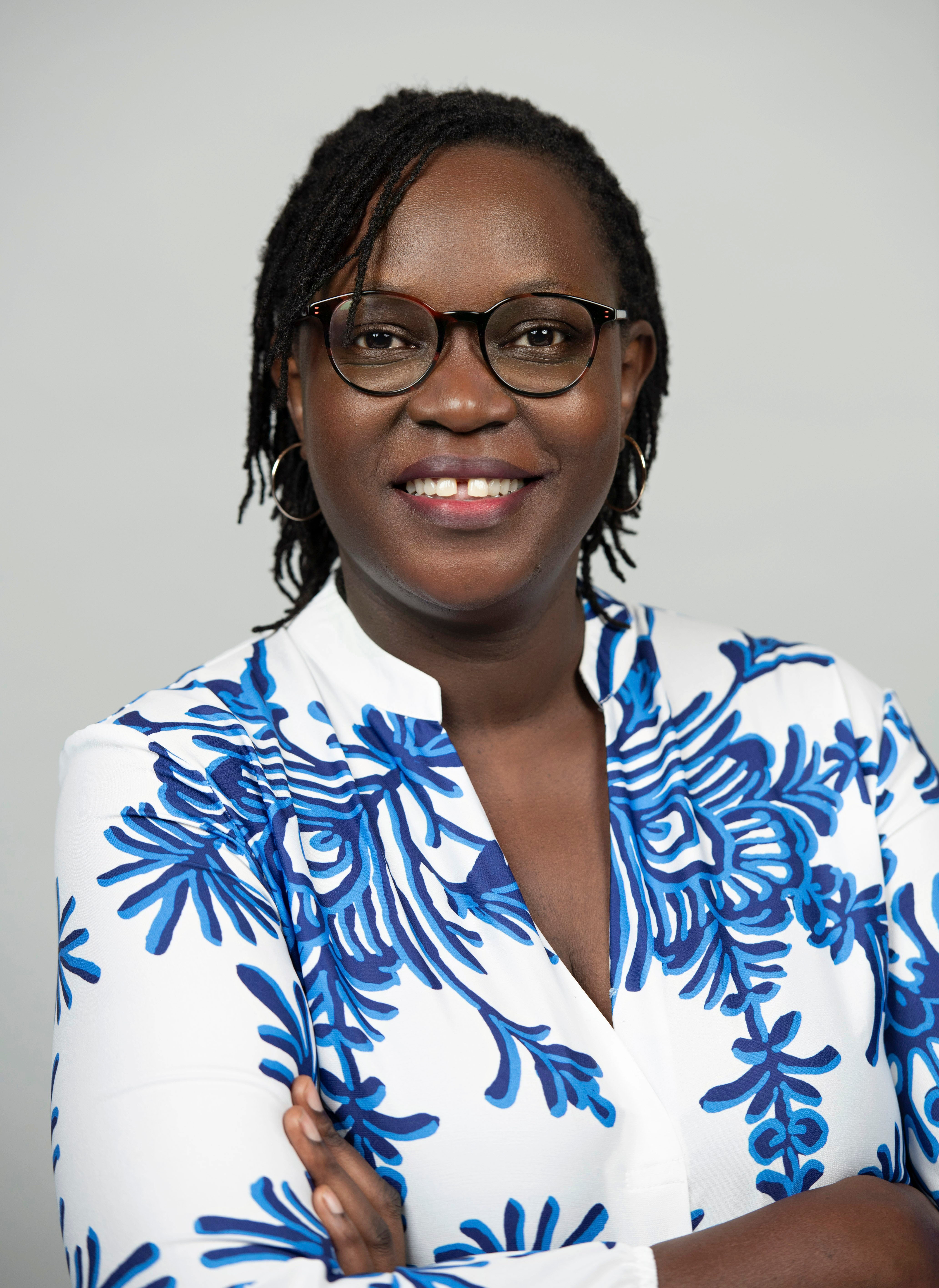
Okao’s research focuses on drowning deaths in fishing communities along Lake Victoria in Kenya, Uganda and Tanzania. Thousands of fishermen die each year, yet drowning prevention receives only a small share of public health funding.
She examined whether safety laws such as lifejacket requirements and vessel regulations reduce fatalities. Her findings were unexpected. In some cases, drowning rates were higher in places where new policies had recently been adopted. The explanation, she noted, is that governments often pass laws after conditions have already worsened.
Real change, her research suggests, may depend not just on legislation but on community-level systems such as search and rescue programs, early warning systems and coordinated implementation.
Her closing reminder resonated. Drowning is preventable. The challenge is ensuring policy moves from paper to practice.
Health Coverage and the Meaning of Expansion

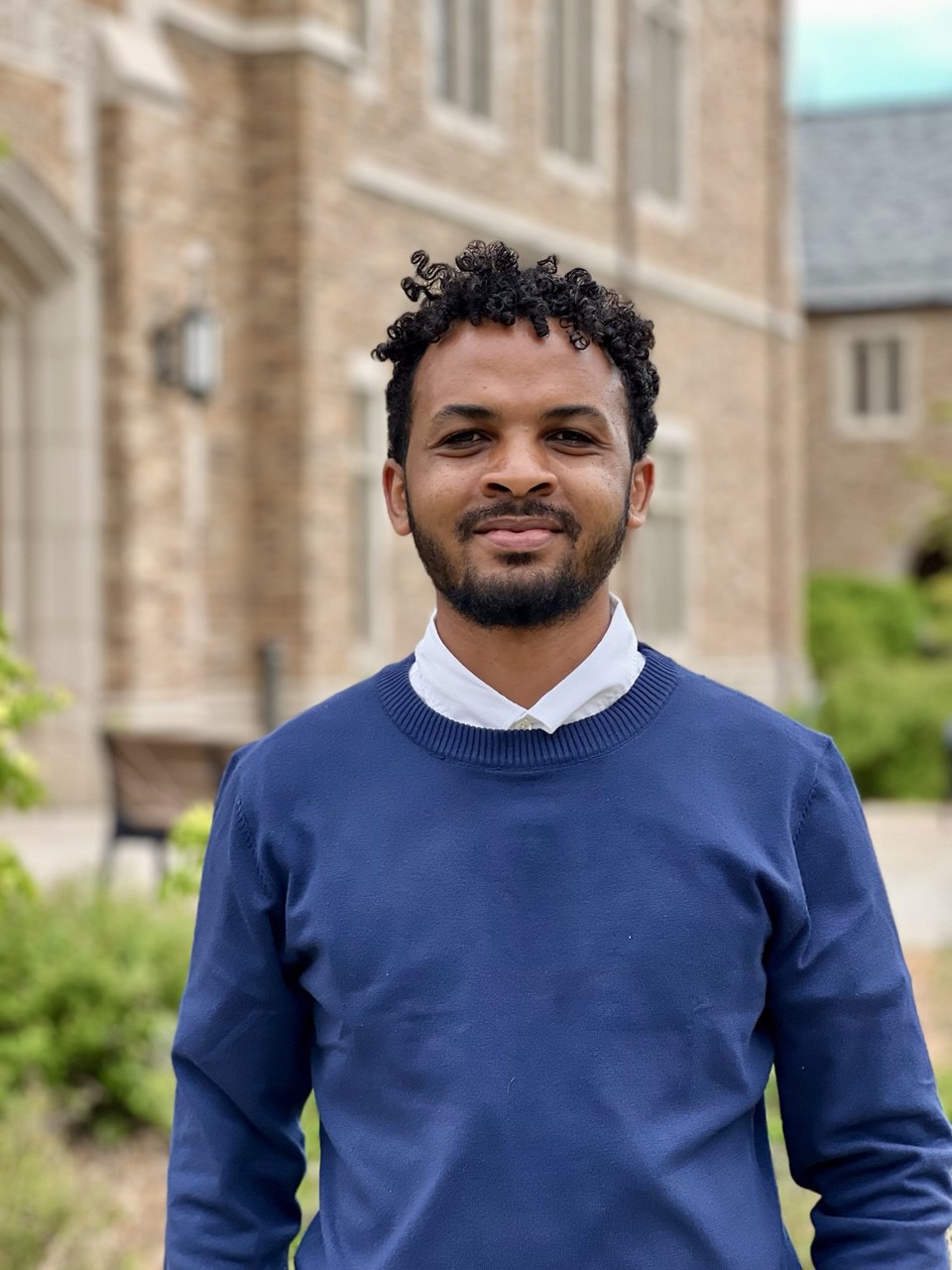
Issa Belmond Thullah turned the focus to health care access in the United States. His research asks whether Medicaid expansion under the Affordable Care Act has truly increased coverage for qualified immigrants.
Comparing expansion and non-expansion states, he found that immigrant enrollment does increase in states that adopt expansion. Wealthier states enroll more immigrants overall, and children’s enrollment significantly boosts participation. Political differences across states were observable but not statistically significant.
But Thullah pushed the conversation beyond statistics.
“Health is wealth, and wealth is health,” he told the audience, describing Medicaid expansion as a mechanism designed to provide health access to those without economic resources.
His work raises a critical question for policymakers. Expanding eligibility is one step. Ensuring people can actually enroll and benefit is another.
When Care Is Misread as Harm
.png)
In the final presentation, Casey Lopez explored how institutions interpret visible injury. In many health care and legal settings, bruises are treated as automatic signs of abuse. While that assumption can protect people experiencing violence, it can also cause harm when context is ignored.
Lopez’s research examines how consensual BDSM relationships, particularly among transgender individuals, are sometimes misread because institutions are not designed to recognize consent, negotiation and boundaries.
These misunderstandings can lead to unnecessary reporting, loss of trust in providers and people withdrawing from services meant to support them. Lopez argues that improved training and better screening tools could help institutions distinguish between coercion and consensual relationships without weakening protections for those in danger.
Though the topics spanned continents and policy arenas, each presentation shared a common thread. Laws and policies matter most in how they are implemented and experienced.
Whether preventing drowning, expanding health coverage or interpreting signs of harm, the work of these Wilder doctoral students underscores a fundamental truth. Public policy is not abstract. It shapes who lives safely, who receives care and who is believed.