False confessions are a leading factor in wrongful convictions, particularly in cases involving adolescents.
Hayley Cleary, PhD, a professor of criminal justice and public policy at VCU’s L. Douglas Wilder School of Government and Public Affairs, has demonstrated how research can help exonerate those who are wrongly convicted. In August 2025, a North Carolina Superior Court judge cited Cleary’s research on adolescent development and juvenile interrogations when vacating the convictions of the “Winston-Salem Five,” five young men charged as teenagers in connection with the 2002 murder of Nathaniel Jones, the grandfather of NBA star Chris Paul, in Winston-Salem, North Carolina.
The ruling marked one of the rare instances in which a judge accepted scientific research on false confessions as “newly discovered evidence,” one of the few legal mechanisms available for defendants seeking to prove their innocence after conviction. The decision carries significance beyond the case itself and signals a potential shift in legal precedent, something that is notoriously difficult to achieve.
Fighting false confessions with facts
“Stress really interferes with young people's ability to make good decisions, to weigh costs and benefits, and to resist pressure.”
-Hayley Cleary, PhD
Cleary’s research applies developmental psychology to police interrogations and examines how adolescents and young adults interact with legal systems. Attorneys across the country contact her during post-conviction litigation to request case review and potentially provide courts with scientific context.
“Trial attorneys will find me and say, ‘I'm defending this young person and I believe their confession given to police was not true,” said Cleary. “They’ll say, ‘I think he's factually innocent. Could you review the police discovery? Could you watch this video? Can you help me understand why these kinds of things might happen more frequently?’”
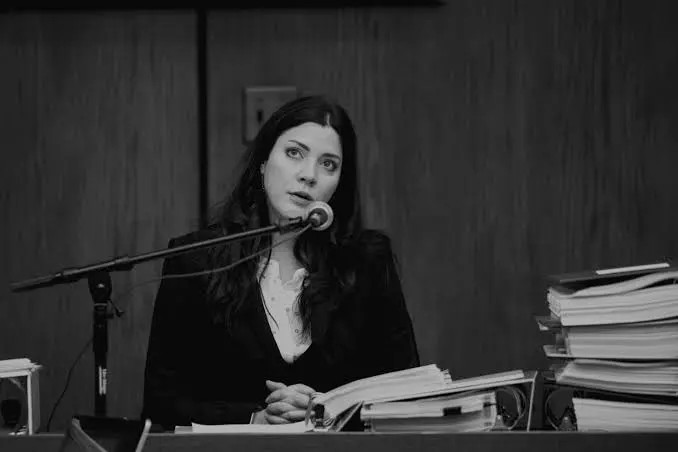
As an expert witness, Cleary educates legal decision makers about the science behind false confessions rather than offering opinions on whether a confession is factually false. She may testify before a judge or jury or submit written reports. Her research addresses why people confess to crimes they did not commit, who is most likely to do so, and under what circumstances.
It is not only Cleary’s work but more than a century of psychological research that helps explain why adolescents are particularly vulnerable in police interrogations. Individuals between the ages of 10 and 25 are developmentally immature and less likely to understand the long-term consequences of their decisions, making them especially susceptible to coercion.
Recent advances in developmental neuroscience further demonstrate how stressful environments affect adolescents’ decision-making at a neurobiological level.
“Stress really interferes with young people's ability to make good decisions, to weigh costs and benefits, and to resist pressure,” explained Cleary. “In fact, the ability to navigate emotionally charged situations continues to develop past the age of legal majority, which is 18 in most states.”
Understanding interrogation tactics and risk factors
Law enforcement interrogations often begin with a guilt-presumptive mindset–a belief, conscious or unconscious--that a suspect is guilty. This approach can foster confirmation bias and lead officers to use tactics that increase the risk of false confessions, particularly among juveniles.
Common accusatory interrogation practices associated with elevated risk include:
- Minimization, or downplaying the seriousness or consequences of a crime to imply leniency
- Extended custody and physical isolation from family or friends
- Presentation of false evidence
- Bluffing, or suggesting evidence exists that could be tested
- Fabrication of false police or crime lab reports
These techniques can distort perceptions of the risks and potential benefits of confessing. When individuals are presented with information that contradicts what they believe to be true, the brain often attempts to rationalize the discrepancy.Certain personal characteristics also heighten vulnerability to coercion, including developmental immaturity, neurodevelopmental disorders such as ADHD or autism spectrum disorder, mental illness, suggestible or compliant personality traits, and prior trauma.
Upholding due process
False confessions that result in wrongful convictions impose lasting harm on defendants and their families, undermine trust in law enforcement and place financial burdens on taxpayers.
“We know that incarceration is exorbitantly expensive,” said Cleary. “Not only does it exhaust taxpayer dollars to keep people in prison who didn't commit a crime, but if those people are fortunate enough to be exonerated later on, some may seek monetary compensation. That compensation comes from taxpayers.”
To improve the reliability of information gathered during interrogations, Cleary advocates for training police officers in investigative interview strategies that move away from guilt-presumptive approaches and instead emphasize critical thinking and openness.
Most importantly, she argues that juveniles should be required to consult with an attorney before waiving their Miranda rights.
“We have constitutional rights to protection against self-incrimination, but most people don't widely understand their Miranda rights, especially young people, and even when they do understand their rights, the social pressure to waive them is so great that virtually everyone waives their Miranda rights,” said Cleary.
Adult waiver rates exceed 80 percent, while waiver rates among juveniles approach 90 percent.
Research breeds credibility
“The research I do as a professor at the Wilder School and that I publish in peer review journals establishes my credibility as a scientist and forms the basis of the science I share in the courtroom."
-Hayley Cleary, PhD
Cleary’s work is driven by a commitment to fairness for adolescents navigating the legal system. She credits the Wilder School for providing the institutional support necessary to pursue rigorous, policy-relevant research.
“The research I do as a professor at the Wilder School and that I publish in peer review journals establishes my credibility as a scientist and forms the basis of the science I share in the courtroom,” said Cleary.
While research can inform judicial decision-making in consequential ways, Cleary emphasizes that responsibility for justice ultimately rests with the legal system itself.
As of late 2025, three of the five members of the Winston-Salem Five have been released. Rayshawn Banner and Nathaniel Cauthen remain in custody pending an appeal before the Supreme Court of North Carolina.