What does it take to create a high quality of life?
According to Chesterfield County Administrator Joe Casey, there is no single answer.
"Each of you can define what you determine as your quality of life around you," Casey told attendees during the Wilder School's May Lunch and Learn Series. "There is no wrong definition."
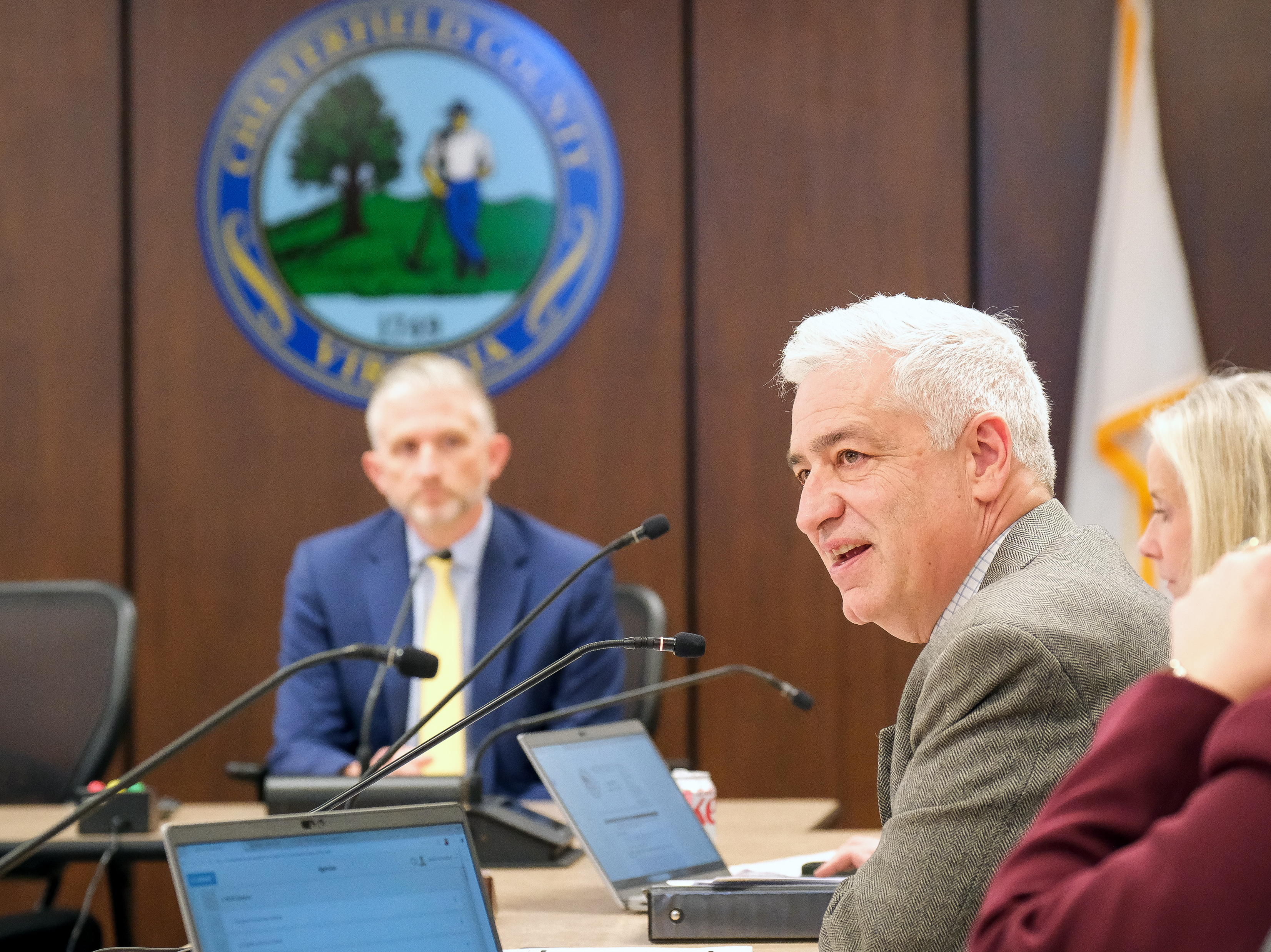
As part of the school's ongoing Lunch and Learn Series, Casey joined moderator Lindsey Evans, Ph.D., assistant professor of public policy and administration and director of the Wilder Fellows program, for a conversation titled Frontline Insights on Advancing Regional Quality of Life. Drawing on more than three decades of experience in local government leadership, Casey explored how local governments help create the conditions that allow individuals, families and communities to thrive.
Throughout the discussion, Casey emphasized that quality of life extends far beyond economic indicators. While factors such as employment, housing and infrastructure remain important, he argued that quality of life is ultimately shaped by the everyday experiences that connect people to their communities.
To illustrate the point, Casey shared a series of photographs highlighting schools, libraries, public safety personnel, transportation projects, parks and community events. Together, the images reflected the many ways local governments influence daily life, often in ways residents may not immediately recognize.
Education, he noted, remains among the most important investments communities can make. Casey emphasized the importance of strong partnerships between local governments and school divisions, describing education as essential to both individual opportunity and long-term community success.
"I want those students to realize they have a community they can come back to, to live, work and play," he said.
Regional cooperation emerged as another major theme. Casey described Central Virginia as a region where neighboring jurisdictions regularly work together to address shared challenges and deliver services more effectively.
Among the examples he highlighted was the region's mutual aid system for public safety agencies. Fire departments, police departments and emergency dispatchers routinely coordinate across local boundaries to ensure residents receive timely assistance when emergencies occur. He also described how neighboring jurisdictions support one another during times of tragedy, staffing stations so public safety personnel can attend funeral services for fallen colleagues.
"There should be nothing more universal in life than dialing 911 and knowing professional and timely help is on the way," Casey said.
The conversation also explored how local governments address more complex social challenges. Casey discussed Chesterfield County's Helping Addicts Recover Progressively (HARP) program, which focuses on addressing the underlying trauma that often contributes to substance use disorders.
"If the trauma that led you to do drugs is still existing back out in the real world, that trauma path's going to get you into drugs again," he said.
Yet some of the most memorable moments came during Casey's reflections on the human side of public service.
Looking back on his career, he described encounters with residents facing homelessness, addiction and other hardships. Those experiences, he said, often challenged his assumptions and broadened his understanding of community.
"The things that's touched me the most is where I've seen a stranger help out a stranger," Casey said. "They didn't have to."
He also reflected on lessons learned from residents whose life experiences differed dramatically from his own.
"Some of these people I've learned the most from have a compass and a perspective that I have never seen before," he said.
For Casey, those interactions reinforced a central lesson about public service: effective government begins with understanding and serving people.
That philosophy was perhaps best captured in his definition of citizenship.
"Anyone who puts their head on a pillow at night in Chesterfield County is a citizen of Chesterfield County," Casey said. "We are all accountable to you."
Throughout the discussion, Evans helped connect Casey's experiences to broader questions facing today's public servants, including how communities build trust, foster civic engagement and prepare future generations of leaders. The conversation also explored the role of internships, mentorship and professional associations in developing the next generation of public service professionals.
As Casey prepares to retire this summer after more than three decades in local government, his reflections offered attendees more than a look back at a distinguished career. They provided a reminder that quality of life is built through strong institutions, collaborative partnerships and a shared commitment to serving others.
Or, as Casey put it:
"It's face-to-face. It's people helping people."
The Wilder School's Lunch and Learn Series brings together scholars, practitioners and public leaders to explore contemporary issues in public policy, administration and governance.
The discussion also explored economic development, housing, transportation, fiscal stewardship, regionalism and the future of public service. To hear Casey's complete remarks and conversation with Evans, watch the May Lunch and Learn recording on the Wilder School's YouTube channel.