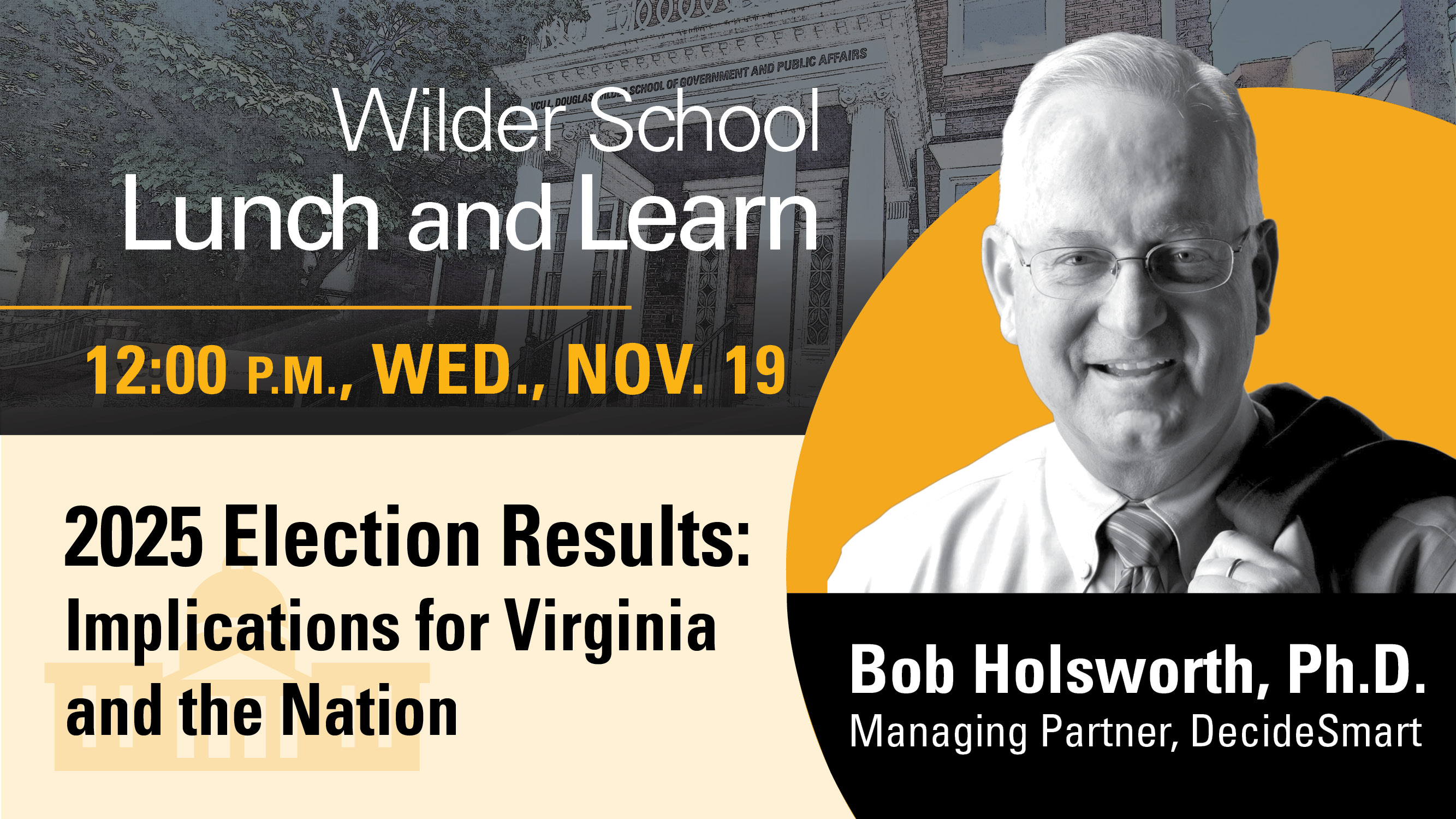
Political analyst Dr. Bob Holsworth joined the Wilder School for a well-attended virtual Lunch and Learn on November 19 to examine the results of Virginia’s recent statewide elections. A longtime scholar of state politics and founding director of both the Center for Public Policy and the L. Douglas Wilder School of Government and Public Affairs at VCU, Holsworth brought decades of statewide insight to a conversation guided by Associate Dean Robyn McDougle. Their exchange blended analysis, data and candid assessment, offering participants a clear look at the political forces shaping voter behavior in 2025.
Holsworth opened by noting how much Virginia’s political identity has evolved. “We’re in a truly competitive moment,” he said. “The electorate is mobile, especially in the suburbs, and those shifts decide elections.” Turnout patterns in Henrico, Chesterfield and Northern Virginia were especially influential, he added, and independent voters played a more decisive role than either party anticipated.
“Parties don’t win Virginia anymore,” he said. “Candidates do.”
McDougle, who anchored the session with data-informed questions, pressed Holsworth to connect these shifts to trends emerging in the Commonwealth Poll. Her framing emphasized how voter sentiment builds over time and how concerns at the community level often prefigure statewide debate.
“We’re in a truly competitive moment. The electorate is mobile, especially in the suburbs, and those shifts decide elections.”
— Bob Holsworth, Ph.D.
What Mattered Most to Voters
Holsworth identified three issue areas that defined this election cycle.
- Education: “Parents remain the single most influential voting bloc in Virginia politics,” he said.
- Affordability: “Inflation isn’t abstract. It’s the cost of groceries, housing and child care. Voters feel it every day.”
- Public safety: “People aren’t looking for ideological extremes. They want balance and practicality.”
McDougle noted that these concerns closely mirror the Commonwealth Poll’s findings, which show consistent calls for “stability, transparency and sincerity” from state leadership. Together, their exchange offered a layered view of how policy issues translate into voter behavior.
A Candid Exchange on DEI and Institutional Leadership
One of the most striking moments came when McDougle asked Holsworth how institutional leadership influences public trust. Holsworth did not hesitate.
“President Rao talks about DEI,” he said, “but the follow-through has not matched the language.”
He continued: “VCU has made statements, but it hasn’t built the deep infrastructure that a real equity commitment requires. People notice when the investment isn’t there.”
When McDougle pressed him on how this affects confidence in public institutions, Holsworth added, “Students know when something is performative. Faculty knows. The broader public knows. Authenticity matters.”
The exchange drew strong reactions in the chat, with participants echoing the need for alignment between institutional values and action.
Looking Ahead
As the conversation concluded, Holsworth outlined what he believes will shape Virginia’s political landscape in the coming year.
“Virginia will stay competitive,” he said. “The party that speaks credibly to parents, to working families who feel squeezed, to communities that want real investment — that’s the party that wins statewide.”
He noted that suburban voters will remain the Commonwealth’s political center of gravity and that independents will continue to play an outsized role. McDougle closed the session by underscoring the importance of continued research and public dialogue in understanding Virginia’s evolving political landscape — a theme reflected throughout their dynamic exchange.